O Centro Universitário Belas Artes promoveu em 2024 um concurso para desenvolver a árvore da Belas Artes na unidade do Shopping Cidade Jardim. O tema do concurso era livros e sustentabilidade. Tivemos liberdade criativa total e minha proposta consistiu em apresentar um projeto intitulado: "O maior presente é o conhecimento". A seguir, a descrição do projeto.
In 2024, the Belas Artes University Center held a competition to develop the Belas Artes tree at the Shopping Cidade Jardim branch. The theme of the competition was books and sustainability. We had complete creative freedom and my proposal consisted of presenting a project entitled: "The greatest gift is knowledge". Below is the description of the project.
TerezaPRT
TerezaPRT
TerezaPRT
TerezaPRT
TerezaPRT
TerezaPRT
TerezaPRT
TerezaPRT
TerezaPRT
TerezaPRT
Por que uma árvore é tão importante? Ela está constantemente nos dando
presentes, seja uma sombra, flores ou frutos. As árvores também são símbolo de
renovação, de vida e de resistência. Elas sobrevivem às várias estações do ano, se
reinventando e se fortalecendo para perdurarem durante séculos e até gerações.
E para este Natal, o maior presente que esta árvore nos dá é o do
conhecimento, que permite nossa desenvoltura, força e abre nossas mentes para
uma vida mais plena. O conhecimento é o que levou nomes até então
desconhecidos, a fazerem história, deixando um legado e nos iluminando com
suas ideias até hoje. Assim foi com Clarice Lispector, Machado de Assis, Carlos
Drummond de Andrade, Jorge Amado, Hilda Hilst, Monteiro Lobato, Cora Coralina
e tantos outros escritores brasileiros.
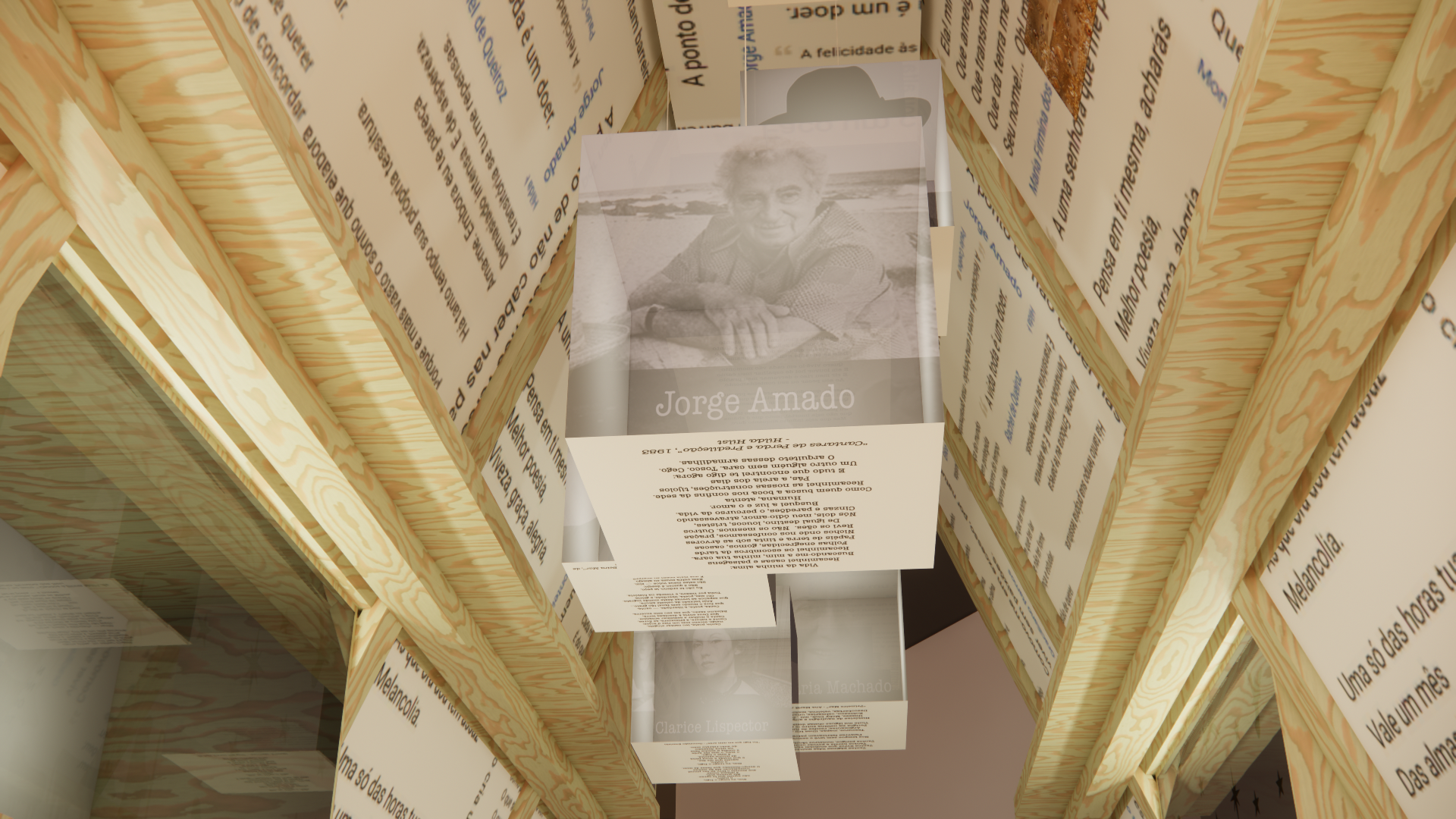
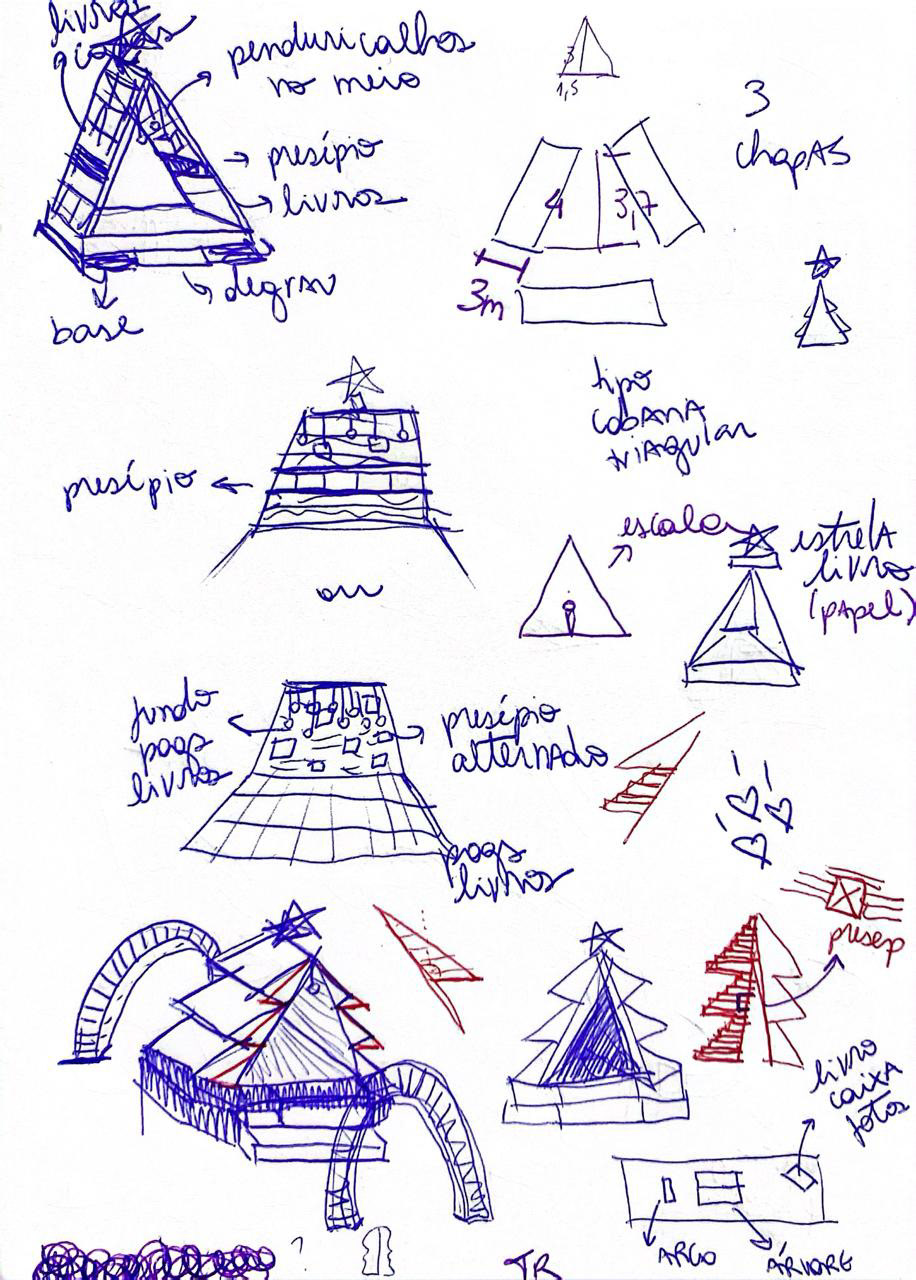
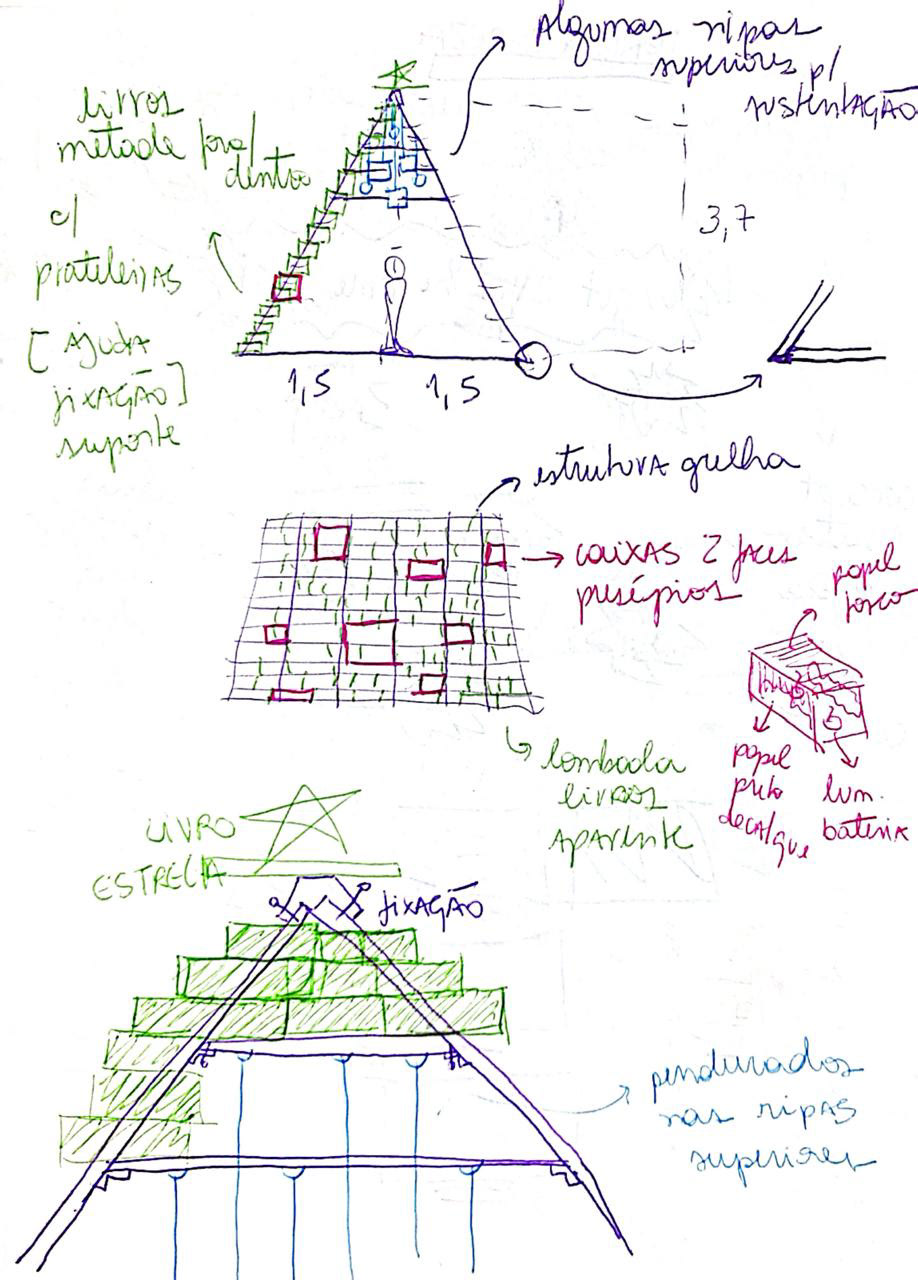
Na parte interna superior temos pequenas caixas de papel com imagens
impressas desses grandes nomes da literatura brasileira, representando os autores
que vêm do além para nos iluminar com suas ideias e histórias. Além disso, os
cubos representam os enfeites que são colocados nas árvores de natal.
Normalmente esses enfeites representam amor, amizade, reconciliação e
felicidade. Aqui, eles representam principalmente a esperança de um futuro
melhor, que vem diretamente da eternidade. O que nos salvará no futuro, são os
conhecimentos colhidos do passado.
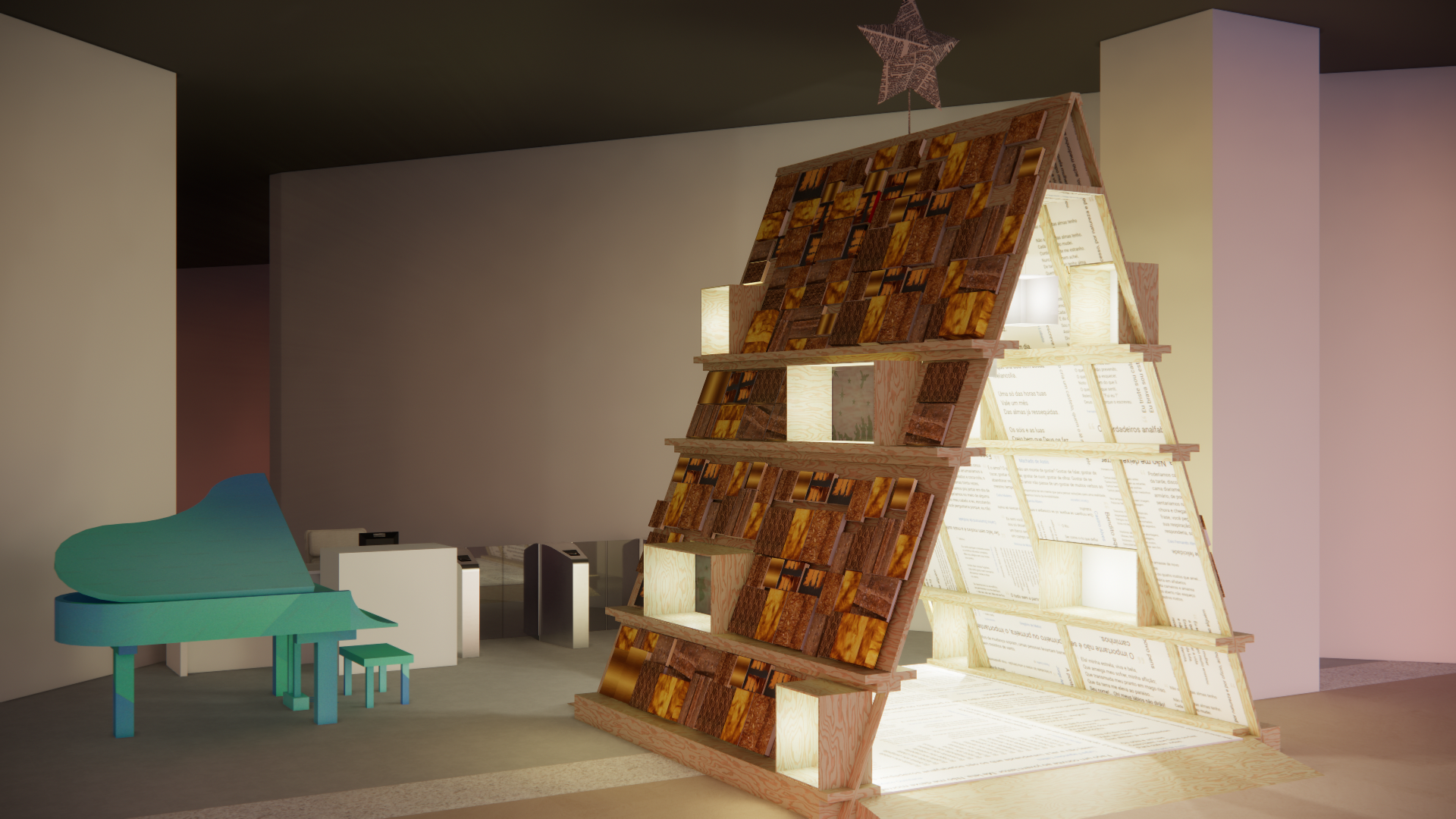
No topo, a estrela com 5 pontas é feita com folhas de livros dobradas e nos
aponta várias direções, visto nossas várias possibilidades de escolha para nossas
vidas. Ela não está nas pontas da árvore, mas sim no meio, simbolizando o
momento presente, entre o passado e o futuro. A estrela nessa posição nos
lembra que o único caminho é viver o agora, o entre, um quase algo que ainda
não aconteceu. Parece frágil, assim como sua forma feita em papel, mas sua
estrutura metálica é o alicerce que a permite viver de forma leve. A base, nesse
caso o conhecimento representado pelas folhas dos livros, é o que a sustenta.
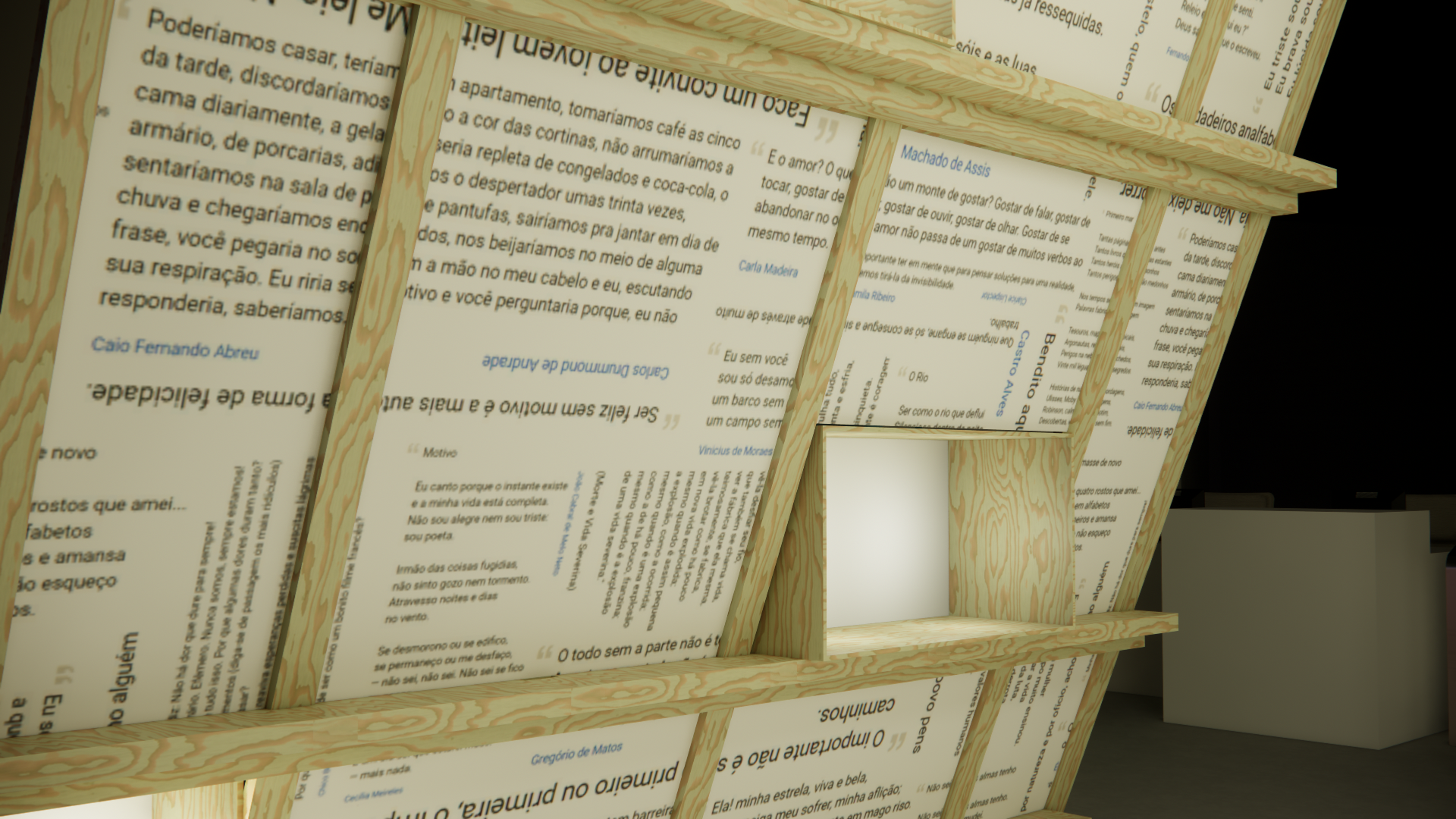
O presépio, colocado entre os vãos da estrutura de mdf, simboliza o
nascimento de Jesus, com silhuetas iluminadas que podem ser vistas tanto do
lado interno como externo da árvore. Essa dualidade representa nossa fé, que
deve trazer luz de fora para dentro.
Para representar o luxo que hoje é dedicar tempo para parar e ler um livro e
ao mesmo tempo, o quão preciosos eles são, as capas têm intervenções de cores
douradas, a partir do uso de tintas, sprays, papéis e enfeites variados. Seja pela
correria do dia a dia, seja pela facilidade de nos perdermos entre telas de celulares
e computadores, os livros parados nas estantes dos lares se igualam às joias
guardadas em cofres e gavetas, que nunca são usadas.
E assim, também como as joias de ouro ou diamantes que continuam
valendo muito com o passar dos anos, os livros perduram atemporais na história
com suas infinitas narrativas.
O conhecimento, portanto, é um portal, que nos transporta para novos
mundos, oportunidades e realizações, nos alegrando com a possibilidade de viver
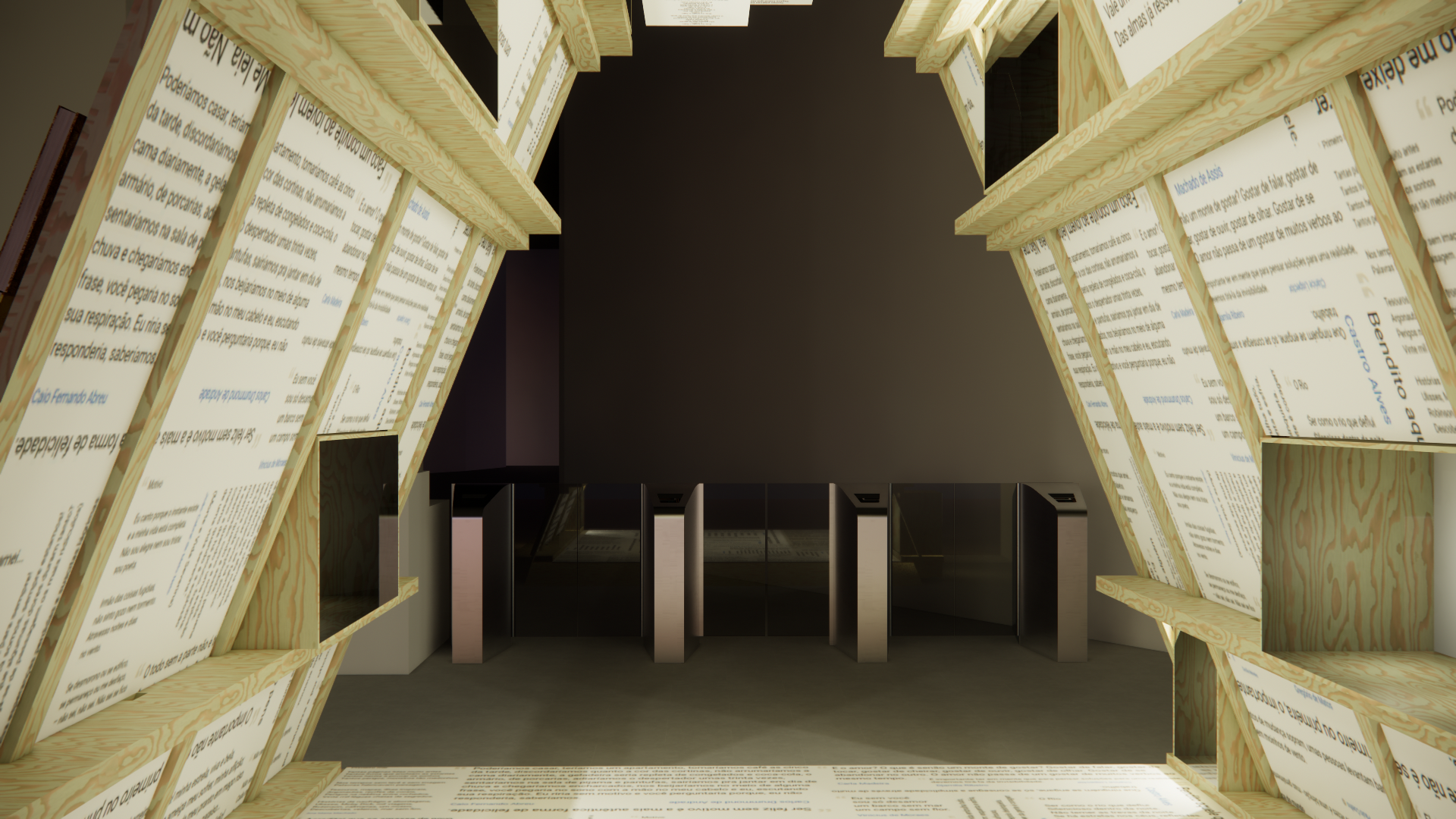
mil vidas em uma. Na parte de dentro, trechos de livros dos autores mencionados
cobrem toda a superfície interna, inclusive no piso, permitindo que possamos
sentir que estamos entrando dentro dessas histórias. Somos parte da História.
Esse portal, direcionado para a entrada da unidade Belas Artes no
Shopping Cidade Jardim, é um convite. Da mesma forma que o Centro
Universitário Belas Artes busca estimular o desejo permanente de
aperfeiçoamento pessoal e profissional em seus alunos, esta árvore nos convida a
um momento de contemplação e transformação, a partir da possibilidade de
rever as histórias que nos trouxeram até aqui e a de criar nossa própria história
para o futuro.
presentes, seja uma sombra, flores ou frutos. As árvores também são símbolo de
renovação, de vida e de resistência. Elas sobrevivem às várias estações do ano, se
reinventando e se fortalecendo para perdurarem durante séculos e até gerações.
E para este Natal, o maior presente que esta árvore nos dá é o do
conhecimento, que permite nossa desenvoltura, força e abre nossas mentes para
uma vida mais plena. O conhecimento é o que levou nomes até então
desconhecidos, a fazerem história, deixando um legado e nos iluminando com
suas ideias até hoje. Assim foi com Clarice Lispector, Machado de Assis, Carlos
Drummond de Andrade, Jorge Amado, Hilda Hilst, Monteiro Lobato, Cora Coralina
e tantos outros escritores brasileiros.
Na parte interna superior temos pequenas caixas de papel com imagens
impressas desses grandes nomes da literatura brasileira, representando os autores
que vêm do além para nos iluminar com suas ideias e histórias. Além disso, os
cubos representam os enfeites que são colocados nas árvores de natal.
Normalmente esses enfeites representam amor, amizade, reconciliação e
felicidade. Aqui, eles representam principalmente a esperança de um futuro
melhor, que vem diretamente da eternidade. O que nos salvará no futuro, são os
conhecimentos colhidos do passado.
No topo, a estrela com 5 pontas é feita com folhas de livros dobradas e nos
aponta várias direções, visto nossas várias possibilidades de escolha para nossas
vidas. Ela não está nas pontas da árvore, mas sim no meio, simbolizando o
momento presente, entre o passado e o futuro. A estrela nessa posição nos
lembra que o único caminho é viver o agora, o entre, um quase algo que ainda
não aconteceu. Parece frágil, assim como sua forma feita em papel, mas sua
estrutura metálica é o alicerce que a permite viver de forma leve. A base, nesse
caso o conhecimento representado pelas folhas dos livros, é o que a sustenta.
O presépio, colocado entre os vãos da estrutura de mdf, simboliza o
nascimento de Jesus, com silhuetas iluminadas que podem ser vistas tanto do
lado interno como externo da árvore. Essa dualidade representa nossa fé, que
deve trazer luz de fora para dentro.
Para representar o luxo que hoje é dedicar tempo para parar e ler um livro e
ao mesmo tempo, o quão preciosos eles são, as capas têm intervenções de cores
douradas, a partir do uso de tintas, sprays, papéis e enfeites variados. Seja pela
correria do dia a dia, seja pela facilidade de nos perdermos entre telas de celulares
e computadores, os livros parados nas estantes dos lares se igualam às joias
guardadas em cofres e gavetas, que nunca são usadas.
E assim, também como as joias de ouro ou diamantes que continuam
valendo muito com o passar dos anos, os livros perduram atemporais na história
com suas infinitas narrativas.
O conhecimento, portanto, é um portal, que nos transporta para novos
mundos, oportunidades e realizações, nos alegrando com a possibilidade de viver
mil vidas em uma. Na parte de dentro, trechos de livros dos autores mencionados
cobrem toda a superfície interna, inclusive no piso, permitindo que possamos
sentir que estamos entrando dentro dessas histórias. Somos parte da História.
Esse portal, direcionado para a entrada da unidade Belas Artes no
Shopping Cidade Jardim, é um convite. Da mesma forma que o Centro
Universitário Belas Artes busca estimular o desejo permanente de
aperfeiçoamento pessoal e profissional em seus alunos, esta árvore nos convida a
um momento de contemplação e transformação, a partir da possibilidade de
rever as histórias que nos trouxeram até aqui e a de criar nossa própria história
para o futuro.
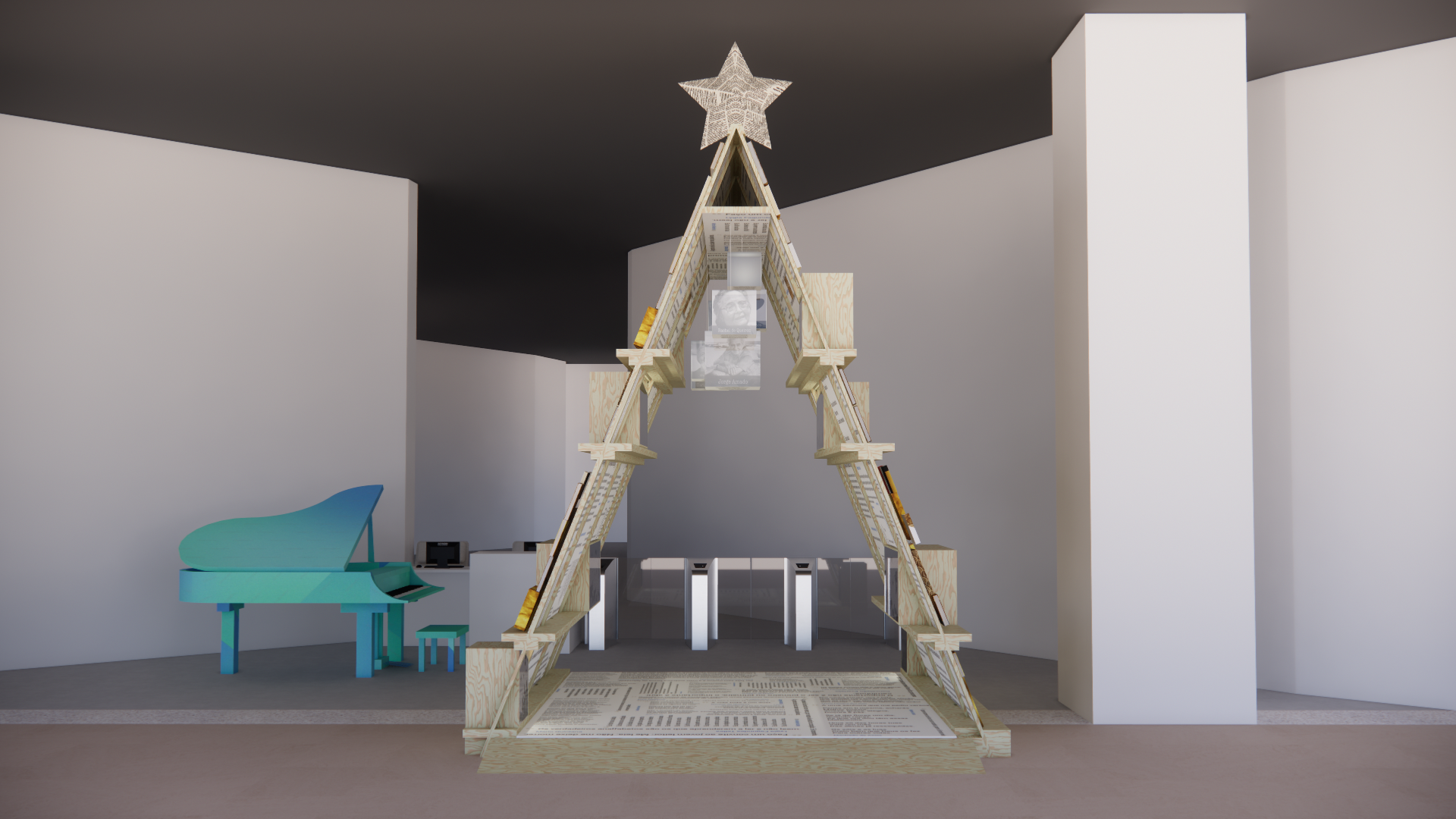
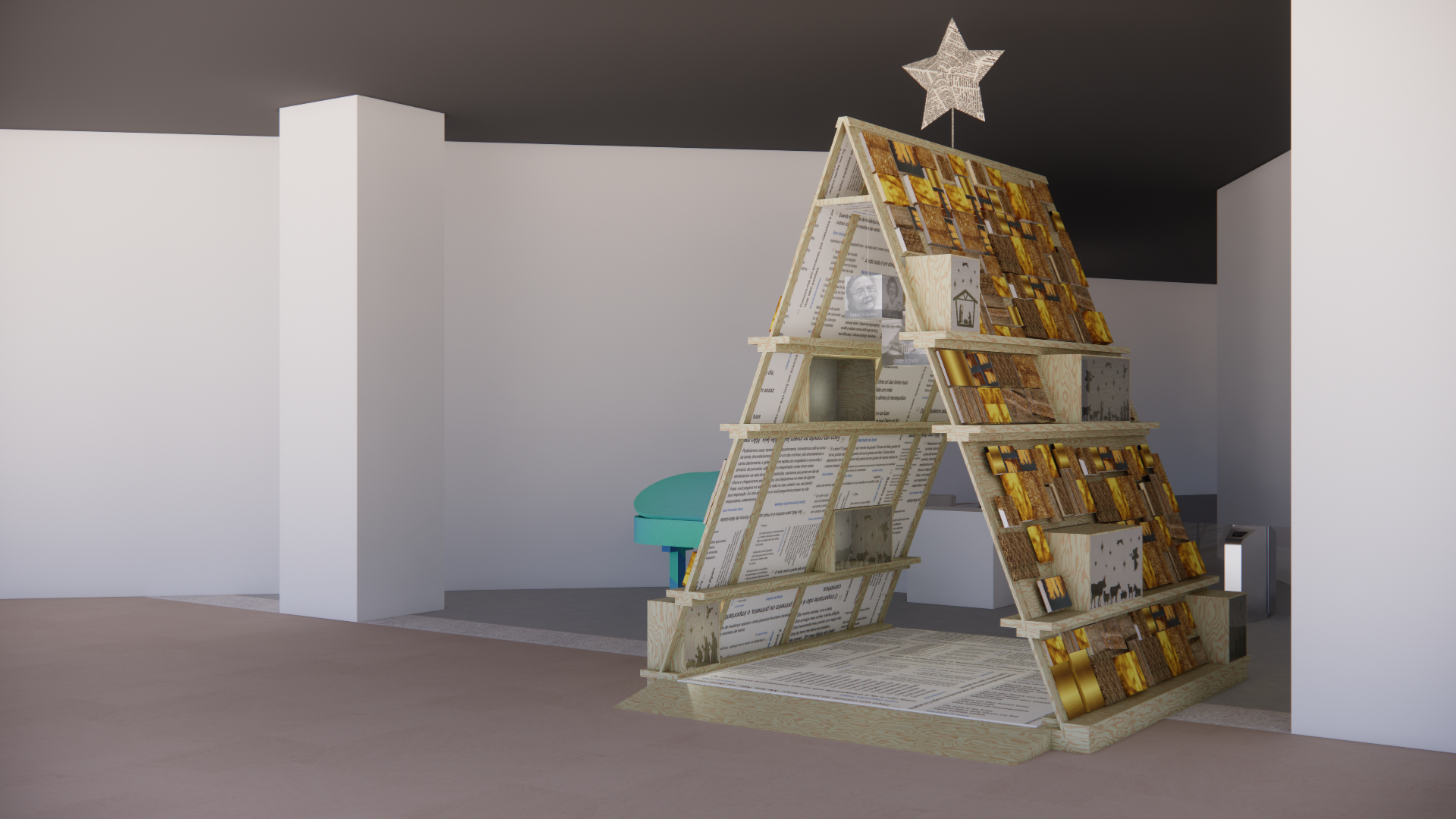
Why is a tree so important? It is constantly giving us gifts, whether it be shade, flowers or fruit. Trees are also a symbol of renewal, life and resistance. They survive the various seasons of the year, reinventing themselves and strengthening themselves to last for centuries and even generations. And for this Christmas, the greatest gift that this tree gives us is knowledge, which allows us resourcefulness, strength and opens our minds to a fuller life. Knowledge is what led previously unknown names to make history, leaving a legacy and enlightening us with their ideas to this day. This was the case with Clarice Lispector, Machado de Assis, Carlos Drummond de Andrade, Jorge Amado, Hilda Hilst, Monteiro Lobato, Cora Coralina and so many other Brazilian writers.
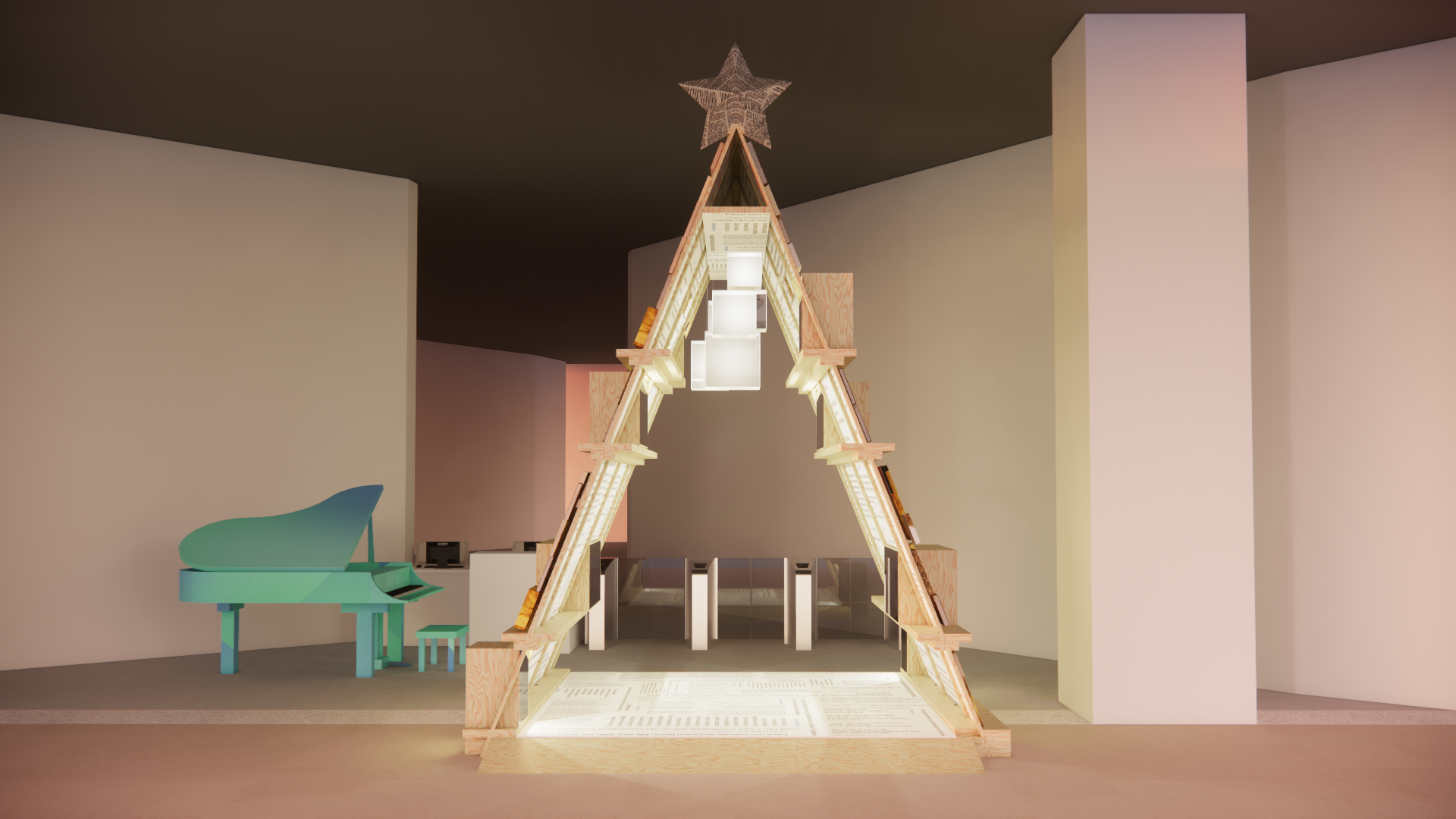
In the upper part of the inside, we have small paper boxes with printed images of these great names in Brazilian literature, representing the authors who come from beyond to enlighten us with their ideas and stories. Furthermore, the cubes represent the decorations that are placed on Christmas trees. These decorations usually represent love, friendship, reconciliation and happiness. Here, they mainly represent the hope for a better future, which comes directly from eternity. What will save us in the future is the knowledge gathered from the past.
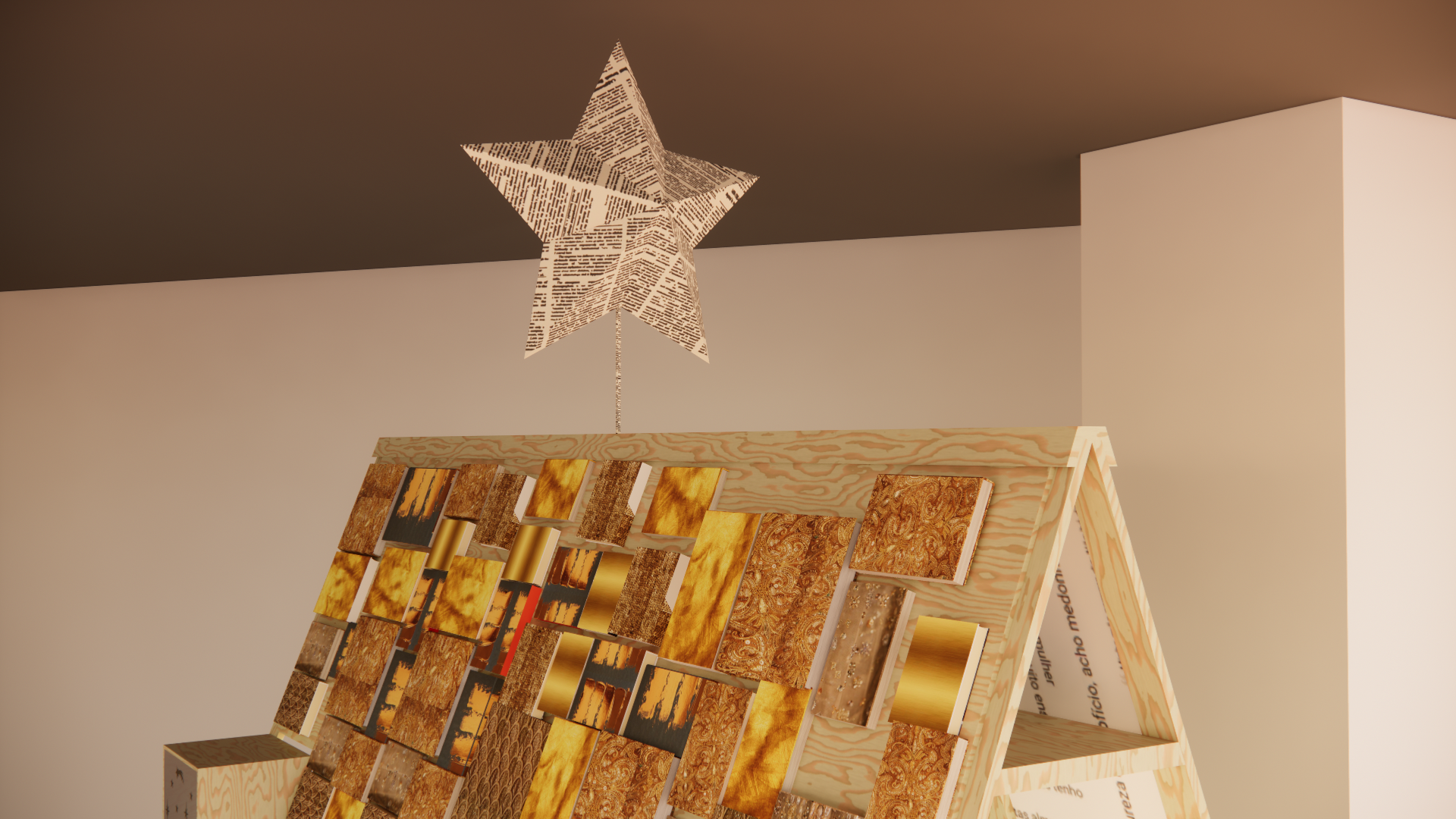
At the top, the 5-pointed star is made with folded pages of books and points us in several directions, given our various possibilities of choice for our lives. It is not at the ends of the tree, but in the middle, symbolizing the present moment, between the past and the future. The star in this position reminds us that the only way is to live in the now, in between, an almost something that has not yet happened. It seems fragile, just like its paper shape, but its metallic structure is the foundation that allows it to live lightly. The base, in this case the knowledge represented by the pages of the books, is what sustains it. The nativity scene, placed between the gaps in the MDF structure, symbolizes the birth of Jesus, with illuminated silhouettes that can be seen from both the inside and outside of the tree.
This duality represents our faith, which must bring light from the outside in. To represent the luxury of taking the time to stop and read a book today and, at the same time, how precious they are, the covers have interventions in golden colors, using paints, sprays, papers and various decorations. Whether due to the rush of everyday life or the ease of getting lost between cell phone and computer screens, the books sitting on the shelves of homes are like the jewels stored in safes and drawers, which are never used. And so, just like gold or diamond jewels that continue to be worth a lot as the years go by, books endure timelessly in history with their infinite narratives.
Knowledge, therefore, is a portal that transports us to new worlds, opportunities and achievements, making us happy with the possibility of living a thousand lives in one. Inside, excerpts from books by the aforementioned authors cover the entire interior surface, including the floor, allowing us to feel that we are entering these stories. We are part of History. This portal, directed towards the entrance of the Belas Artes unit in the Shopping Cidade Jardim, is an invitation. In the same way that the Belas Artes University Center seeks to stimulate the permanent desire for personal and professional improvement in its students, this tree invites us to a moment of contemplation and transformation, based on the possibility of reviewing the stories that brought us here and creating our own story for the future.
In the upper part of the inside, we have small paper boxes with printed images of these great names in Brazilian literature, representing the authors who come from beyond to enlighten us with their ideas and stories. Furthermore, the cubes represent the decorations that are placed on Christmas trees. These decorations usually represent love, friendship, reconciliation and happiness. Here, they mainly represent the hope for a better future, which comes directly from eternity. What will save us in the future is the knowledge gathered from the past.
At the top, the 5-pointed star is made with folded pages of books and points us in several directions, given our various possibilities of choice for our lives. It is not at the ends of the tree, but in the middle, symbolizing the present moment, between the past and the future. The star in this position reminds us that the only way is to live in the now, in between, an almost something that has not yet happened. It seems fragile, just like its paper shape, but its metallic structure is the foundation that allows it to live lightly. The base, in this case the knowledge represented by the pages of the books, is what sustains it. The nativity scene, placed between the gaps in the MDF structure, symbolizes the birth of Jesus, with illuminated silhouettes that can be seen from both the inside and outside of the tree.
This duality represents our faith, which must bring light from the outside in. To represent the luxury of taking the time to stop and read a book today and, at the same time, how precious they are, the covers have interventions in golden colors, using paints, sprays, papers and various decorations. Whether due to the rush of everyday life or the ease of getting lost between cell phone and computer screens, the books sitting on the shelves of homes are like the jewels stored in safes and drawers, which are never used. And so, just like gold or diamond jewels that continue to be worth a lot as the years go by, books endure timelessly in history with their infinite narratives.
Knowledge, therefore, is a portal that transports us to new worlds, opportunities and achievements, making us happy with the possibility of living a thousand lives in one. Inside, excerpts from books by the aforementioned authors cover the entire interior surface, including the floor, allowing us to feel that we are entering these stories. We are part of History. This portal, directed towards the entrance of the Belas Artes unit in the Shopping Cidade Jardim, is an invitation. In the same way that the Belas Artes University Center seeks to stimulate the permanent desire for personal and professional improvement in its students, this tree invites us to a moment of contemplation and transformation, based on the possibility of reviewing the stories that brought us here and creating our own story for the future.